
If you filed a joint tax return and later found that your spouse hid income, you may still be responsible under IRS responsibility hidden income spouse rules, even if you didn’t know about it. The IRS can still hold both spouses liable for the tax debt unless you qualify for relief like innocent spouse relief.
This guide explains how IRS joint return liability works, when the IRS may hold one or both spouses responsible, and how options like innocent spouse hidden tax fraud protections, and IRS tax relief options may help in these situations. It also covers when innocent spouse relief services may apply if a spouse hid income IRS reporting should have included.
| Key Takeaways • Understand how filing a joint tax return creates IRS joint return liability, where both spouses are responsible for the full tax debt. • Learn how IRS responsibility hidden income spouse cases can arise when one spouse hides income, but both are still held liable. • Find out how innocent spouse relief can help reduce or remove tax responsibility if you did not know about the errors or hidden income. • Learn how the IRS evaluates your case using factors like “reason to know,” financial benefit, and fairness. • Understand what documents are needed, such as bank records, timelines, and proof of financial control, to support your claim. • Know the different relief options available, including traditional, separation of liability, and equitable relief. • Learn why relief may be denied if there is knowledge of the issue, financial benefit, or weak supporting evidence. • Understand how to appeal a denial and submit additional evidence to strengthen your case. • Learn the importance of filing Form 8857 to request innocent spouse relief from the IRS. Understand how professional help can improve accuracy, reduce stress, and increase the chances of approval. |
Understanding Joint Tax Return Liability
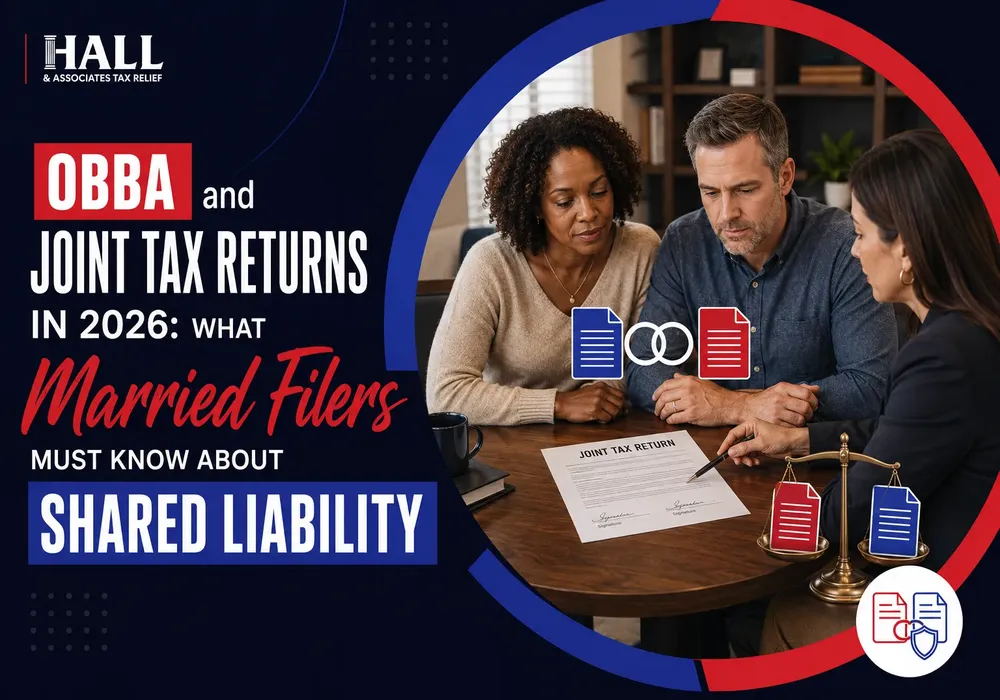
When you file a joint tax return (Married Filing Jointly), the IRS usually holds both spouses responsible for everything on the return, including any tax owed. This means that even if only one spouse hid income or made mistakes, both can still be legally liable, which is where IRS responsibility hidden income spouse issues can come up.
Why Married Couples Share Tax Responsibility
When married couples file jointly, they share full responsibility for the tax return under a rule called joint and several liability. This means the IRS can collect the entire tax debt from either spouse, not just split it equally.
In simple terms:
- Both spouses sign the return, so both are responsible.
- Both can be charged tax, penalties, and interest if something is wrong.
- The IRS may go after whichever spouse is easier to collect from.
How Hidden Income Creates Tax Problems
When a spouse hides income, IRS rules still treat it as part of the joint tax return. This can create serious tax issues even if the other spouse was unaware. Common examples include cash income, side jobs paid through apps, unreported business sales, off-the-books work, or missing crypto and investment transactions.
If income is not reported, the IRS may charge:
- Extra tax on the unpaid amount
- Accuracy-related penalties for incorrect reporting
- Interest that increases over time
- In serious cases, civil fraud penalties may be imposed if the underreporting was intentional
When the IRS Pursues Both Spouses for Tax Debt
When a joint tax return has unpaid taxes, an audit change, or unreported income, the IRS can hold both spouses responsible for the full amount. This is a common situation in IRS responsibility hidden income spouse cases, especially during divorce or separation, when one spouse may have caused the issue.
In these cases, both spouses may be pursued because the IRS treats the return as a shared responsibility under IRS joint return liability rules.
Also Read: Can IRS Garnish Wages Without Warning
Can You Be Held Responsible for a Spouse’s Hidden Income?
Yes, in many cases, you can still be held responsible at least initially. Because of IRS rules for joint returns, the IRS may treat both spouses as liable for the full tax bill, even if one spouse was the only one who hid income. This is a common issue in IRS responsibility hidden income spouse cases. However, you may be able to reduce or remove your responsibility later by applying for relief options, depending on your situation.
What Happens When Income Is Omitted From a Joint Return
When income is missing from a joint tax return, the IRS may first send a notice after matching its records (like W-2s or 1099s) with what was reported on the return. In some cases, it may lead to a full audit. If the IRS believes the income was intentionally left out, it may treat the issue as hidden income tax fraud instead of a simple mistake.
You may receive:
- Notices asking for payment or explaining changes to your return
- Requests for documents like bank statements, receipts, or records
- Additional tax charges, along with penalties and interest
- Collect actions if the balance is not paid or resolved
The IRS View of Joint and Several Liability
Under IRS joint return liability, both spouses are equally responsible for the full tax debt on a joint return. It doesn’t matter who earned the income or caused the error the IRS can collect the entire amount from either spouse. If one spouse ends up paying more, they would need to settle the difference separately between themselves later.
Situations Where Liability May Apply
You may be exposed to IRS responsibility hidden income spouse issues in situations such as:
- You signed a joint return that later turned out to have unreported income
- You benefited from the hidden income, either directly or indirectly
- The IRS believes you knew or should have known that something on the return was incorrect
- You are the spouse with income, bank accounts, or assets that are easier for the IRS to collect from.
What Is Innocent Spouse Relief?
Innocent spouse relief is an IRS program that may reduce or remove your responsibility for tax debt on a joint return if it is unfair to hold you liable.
It is often used in innocent spouse hidden tax fraud cases, such as when a spouse hid income, claimed false deductions, or made other errors on the tax return without the other spouse’s knowledge or involvement.
Purpose of Innocent Spouse Relief
The purpose of innocent spouse relief is to protect people who filed a joint tax return but did not know about errors or hidden income caused by their spouse.
It is meant to prevent someone from being unfairly responsible for tax problems they didn’t create or understand. Many taxpayers use innocent spouse relief services because approval often depends on proving the facts clearly with proper documents and a strong explanation to the IRS.
How Innocent Spouse Relief Protects Taxpayers
If approved, innocent spouse relief can reduce or completely remove your responsibility for the extra tax, and in some cases, the related penalties and interest, linked to the items your spouse caused or hid. It is an important IRS tax relief option for handling innocent spouse hidden tax fraud situations in a formal and structured way.
Common Examples of Hidden Income Cases
Common cases involving hidden income often include situations such as:
- A spouse hid income that the IRS later discovered through matching records (like 1099 income, cash payments, or side business sales)
- Unreported self-employment earnings or contractor work
- Missing investment gains or retirement account withdrawals
- Manipulated bookkeeping or kept two sets of financial records
These situations can lead to serious IRS issues, especially when they result in incorrect reporting on a joint tax return.
Requirements to Qualify for Innocent Spouse Relief
Eligibility for innocent spouse relief depends on the details of your case. In IRS responsibility hidden income spouse situations, the IRS checks whether you knew or should have known about the unreported income or errors, and whether it would be unfair to hold you responsible for the tax debt.
Joint Return Filing Requirement
To qualify for innocent spouse relief, you usually must have filed a joint tax return for the year in question. This joint filing creates IRS joint return liability, meaning both spouses are responsible for any tax, penalties, or interest on the return.
Lack of Knowledge About the Hidden Income
To qualify, you generally must show that when you signed the tax return, you did not know and had no reasonable way of knowing about the hidden income or error. In IRS responsibility hidden income spouse cases, the IRS may look at factors like your lifestyle, access to bank accounts, involvement in finances, and whether the reported income seemed unusual or suspicious.
Unfairness of Holding You Responsible
Even if you meet other conditions, the IRS will still consider whether it is fair to hold you responsible for the tax debt.
To decide this, they may look at factors such as:
- Whether you benefited from the unreported income
- Whether paying the tax would cause financial hardship
- Your current marital status, such as divorce or separation
- Any history of abuse or financial control, if relevant
This fairness review is an important part of many innocent spouse relief decisions.
Supporting Documentation Needed
Strong documentation can help the IRS understand your situation and evaluate your request more clearly. In many cases, you may need evidence such as:
- Bank statements showing limited access to accounts or transactions you didn’t control
- Divorce decrees or separation agreements
- Emails or messages that show deception or financial control
- Proof showing who managed bookkeeping or prepared the tax return
- Any records that support your IRS innocent spouse claim and explain what actually happened
Types of Relief Available Through the IRS
The IRS offers more than one type of relief, and each one works differently depending on your situation. Knowing the options can help you choose the right path and understand other IRS tax relief options that may also apply, especially if collection actions have started.
These relief programs are designed to reduce or eliminate responsibility for certain tax debts, depending on the facts of the case.
Traditional Innocent Spouse Relief
Traditional innocent spouse relief may apply when your spouse’s errors or hidden income caused the tax underpayment, and you did not know, and had no reasonable way to know about it. It is often used in innocent spouse hidden tax fraud cases where income was left out or reported incorrectly on a joint tax return.
Separation of Liability Relief
Separation of liability relief may be available if you are divorced, legally separated, or no longer living with your spouse.
This type of relief divides the tax understatement between both spouses, so you are only responsible for the portion assigned to you instead of the full amount under IRS joint return liability rules.
Equitable Relief
Equitable relief applies when you don’t qualify for other types of innocent spouse relief, but it would still be unfair to hold you responsible for the tax debt. In equitable relief IRS cases, this often happens when you had little control over the tax return or limited ability to review or correct it, yet you are still being held liable.
Injured Spouse Relief vs Innocent Spouse Relief
Injured spouse relief and innocent spouse relief are often confused, but they apply to different situations.
- Injured spouse relief applies when your tax refund is taken to pay your spouse’s separate debts, such as child support or certain loans. It is about protecting your share of a refund.
- Innocent spouse relief applies when a joint tax return is incorrect and you are being held responsible for additional tax, penalties, or interest caused by your spouse.
Also Check: Tax Debt Document Checklist
Situations Where Relief May Be Denied
Relief may be denied if the IRS believes you knew or should have known about the unreported income or tax errors. It can also be denied if there isn’t enough evidence to support your claim. In many IRS responsibility hidden income spouse cases, the decision depends on how strong your facts and documentation are.
Reason to Know Standard
The IRS uses a reason to know standard to decide if you should have been aware of the tax issue. It asks whether a reasonable person in your situation would have noticed something was wrong. Signs like large cash transactions, unusual spending, or unexplained deposits can lead the IRS to believe you had reason to know about the hidden income.
Benefit From the Hidden Income
If the IRS believes you benefited from the hidden income beyond normal living expenses, it may count against you. For example, using the money for luxury items, savings, or investments can show that you had access to it. This can be a reason why innocent spouse relief may be denied.
Incomplete or Inaccurate Applications
Incomplete or inaccurate applications can make it harder for the IRS to understand and approve your request. Missing dates, unclear explanations, or conflicting statements may reduce credibility.
A strong innocent spouse relief application is usually well-organized and includes a clear timeline, a detailed explanation of what happened, and properly labeled supporting documents or attachments.
How to Apply for Innocent Spouse Relief
Applying for innocent spouse relief is a formal process, and meeting deadlines is important. If you are dealing with IRS responsibility hidden income spouse exposure, it’s a good idea to organize your records as early as possible, even before the IRS requests anything. This may include tax returns, IRS notices, and any documents that support your case.
Filing IRS Form 8857
You generally apply for relief by filing Form 8857, which is used to request innocent spouse relief. This form asks for details about your marriage, financial situation, what you knew about the tax return, and why you believe it would be unfair to hold you responsible for the tax debt.
IRS Review and Investigation Process
The IRS may review your case, request additional documents, contact the other spouse, and examine your financial history before making a decision on your innocent spouse relief request.
- Request additional documents
- Contact the other spouse for their input
- Review financial history and household facts
- Issue a written determination
This innocent spouse relief process is one reason people choose experienced innocent spouse relief services to keep the request consistent, complete, and supported.
Timelines and Deadlines to Know
Deadlines for requesting relief depend on the type of relief you are applying for and the current status of your IRS case, such as whether the tax has already been assessed or collection actions have started.
Because these timelines can vary, it’s important to check the innocent spouse filing deadline as early as possible based on your specific situation to avoid missing your chance to apply.
Also Read: Does an Offer in Compromise Affect Credit
What Happens If the IRS Denies Your Request?
If your request is denied, it doesn’t mean the process is over. You may still be able to appeal the decision or submit additional information to strengthen your case. In some situations, you can also explore other relief options to reduce IRS responsibility hidden income spouse exposure depending on your circumstances.
Appealing the Decision
You may be able to appeal the IRS decision through the IRS appeals process. A strong innocent spouse relief appeal addresses the specific reasons for denial and provides clearer explanations along with additional supporting documents to support your case.
Additional Evidence and Documentation
If the IRS questions IRS responsibility hidden income spouse, you can support your case with clear records such as separate bank accounts, proof you were excluded from financial information, or documents showing you had no access to income details. Evidence related to innocent spouse hidden tax fraud can also help show you were unaware of the issue.
These documents are important in cases involving IRS joint return liability and can strengthen your request for innocent spouse relief services under available IRS tax relief options.
Working With a Tax Resolution Professional
Working with a tax resolution professional can make a big difference when your case is complex or high-stakes. An innocent spouse tax attorney or qualified expert can help you organize your documents, explain your situation clearly, and protect your rights when dealing with the IRS.
If you need guidance on next steps, you can speak with an experienced tax relief specialist to understand your options and move forward with confidence.
Special Considerations for Georgia Taxpayers
If you live in Georgia, you may be dealing with both federal and state tax issues at the same time. In these situations, it’s important to review IRS tax relief options along with Georgia’s own collection rules to understand your full liability and possible relief paths.
Federal vs Georgia Tax Liability Issues
Georgia tax liability issues can work differently from IRS rules, even if the income problem is the same. Each agency may use different notices, relief standards, and collection methods, so your case may be handled separately at the federal and state levels.
If both are involved, it’s important to address both IRS tax concerns and Georgia tax liability to avoid gaps in your resolution strategy.
Protecting Assets During a Tax Dispute
Tax disputes can put your assets at risk, including bank levies, wage garnishments, and property liens. To manage this, you may need to consider options like payment plans, temporary collection holds (if eligible), or financial hardship programs.
These steps can be part of a broader IRS tax protection Georgia strategy to reduce enforcement pressure while working toward a long-term resolution.
Why Professional Representation Matters
When your case involves audits, unreported income, or allegations of wrongdoing, professional representation can help you avoid costly mistakes and manage communication with tax authorities more effectively. It ensures your case is presented clearly and strategically from the start.
For many individuals, working with a Georgia tax relief attorney or tax resolution team provides structure, clarity, and stronger support during a stressful tax dispute.
How Hall and Associates Tax Relief Helps Taxpayers Seek Innocent Spouse Relief
Working with a tax professional can help you manage audits, unreported income, and complex IRS notices more effectively by ensuring your case is handled correctly and your response is properly structured. Hall and Associates Tax Relief provides support for taxpayers, including audit defense, resolution strategies, and innocent spouse relief services, helping you understand your options and build a stronger case from the start.
Case Evaluation and Eligibility Review
We review your case using IRS rules, like what you knew, what you benefited from, and what is fair to decide if you qualify for innocent spouse relief.
Preparing Documentation and Evidence
Preparing documentation and evidence means creating a clear IRS packet with a timeline, personal explanation, and supporting documents so your innocent spouse relief request is complete and easy to review.
IRS Representation and Appeals Support
We talk to the IRS for you when needed, reply to their requests, and help with appeals so your case stays on track. This reduces stress and helps you handle the process more smoothly.
Conclusion
Innocent spouse relief cases require careful documentation, clear communication, and a strong understanding of IRS standards. From eligibility review to evidence preparation and IRS representation, each step plays a key role in building a strong case and improving the chances of a fair outcome.
Get trusted guidance with Hall and Associates Tax Relief and take the next step toward resolving your IRS tax concerns with confidence.
FAQ
Can the IRS hold me responsible if my spouse hid income from me?
It can. With joint filing, the IRS may initially treat both spouses as responsible. That’s why many people seek relief when IRS responsibility hidden income spouse issues arise.
What is innocent spouse relief?
It’s an IRS program that may reduce or remove your responsibility for additional tax caused by your spouse’s errors on a joint return. It’s often used in innocent spouse hidden tax fraud cases involving omitted income or false items.
How do I prove I did not know about my spouse’s hidden income?
Proof is usually fact-based. Useful support may include records showing you didn’t control accounts, didn’t handle bookkeeping, and didn’t benefit in unusual ways. In many cases where a spouse hid income IRS matching later reveals, a clear timeline and documentation packet can help.
What IRS form is required for innocent spouse relief?
Typically, you file Form 8857 innocent spouse relief, to request this type of relief.
Can I qualify if I signed the joint tax return?
Yes. Signing the return creates IRS joint return liability, but signing does not automatically disqualify you from relief if you meet the requirements.
What are the different types of innocent spouse relief?
Common categories include traditional innocent spouse relief, separation of liability relief, and equitable relief. A professional can help you compare these and other IRS tax relief options based on your facts.
How long do I have to apply for innocent spouse relief?
Deadlines depend on the type of relief and what actions the IRS has taken. Because timing can be strict, confirm the innocent spouse filing deadline for your specific situation as soon as possible.
What happens if my innocent spouse relief request is denied?
You may be able to appeal, submit additional evidence, or pursue another relief path. An innocent spouse relief appeal usually addresses the IRS’s reasons for denial directly.
Can divorced individuals still qualify for innocent spouse relief?
Yes. Divorce may strengthen eligibility for certain categories, including separation of liability relief, depending on timing and other facts.
Should I hire a tax professional for an innocent spouse case?
Many people do, especially when large balances, audits, or disputed facts are involved. Experienced innocent spouse relief services can help with documentation, deadlines, and communications with the IRS.